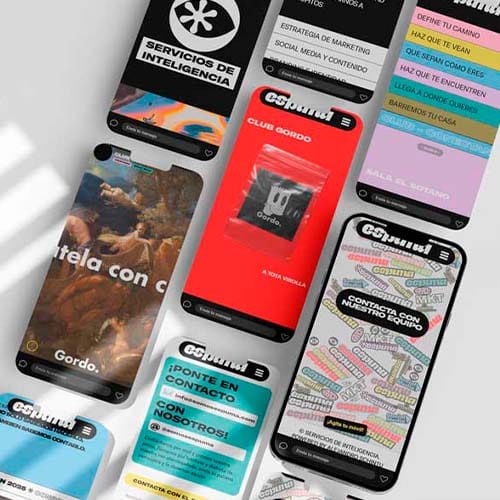
Your competitor has just launched a flashy new website with pretty colours, and it cost them peanuts on a subscription platform. Meanwhile, you’re stuck on the custom website vs template question, wondering whether you’d be spending or investing.Put simply, you don’t need another website, you need one that works.The market is full of invisible businesses squeezed into the same mould. Using a generic template to carry your brand’s authority is like turning up to close the deal of the year in a hired suit three sizes too big. People notice. And it costs you.

What a custom website really is
A custom website isn’t a blank canvas where a designer draws whatever they happen to find ‘creative’. It’s a digital asset that’s planned, structured and coded for the single purpose of producing measurable results for your business.Working made-to-measure means:
- Information architecture built to sell: Every section answers a user’s search intent and serves a conversion goal.
- Clean code with no padding: No dragging around thousands of lines of useless code that nothing on your site ever uses. Zero ‘junk plugins’ slowing your server down.
- A structure shaped around how you operate: If you need a bespoke feature or a CRM integration, the website adapts to you, not you to the limits of a platform.
What using a ready-made template really involves
Templates were born for the mass market. They’re designed to please everyone, so the same one will do for a plumber, a restaurant or a financial consultancy.In three words, that means compromise, bloat and mediocrity.When you install a pre-designed theme (what plenty of people search for as ‘ready-made website designs’), you’re buying a huge block of code packed with features you’ll never use. The promise to ‘make a cheap website’ in a couple of afternoons usually ends in frustration:
Low-cost options and visual shortcuts end up costing you double once you realise you’re not converting, Google is ignoring you and every change needs patches on top of patches.
Custom website vs template: the key differences in performance, SEO, scalability and brand
Put both options on a technical scale and the gap between them is enormous.
| Criterion | Ready-made template | Custom web design |
| Speed (Core Web Vitals) | Slow, weighed down by too many libraries and outdated scripts. | Blistering, with code optimised down to the last millimetre. |
| Technical SEO | Poor semantics and duplicated tags all over the place. | A clean structure that’s indexable from minute one. |
| Scalability | Rigid, so adding features tends to break the layout. | Total, because it grows and evolves at your company’s pace. |
| Brand identity | Cloned, so your website looks like a hundred other businesses’ sites. | Unique, and designed to put you front of mind for your client. |
Performance and speed
Google has no patience, and neither do your users. If your site takes more than two seconds to load, you’re handing clients to your competitors on a plate (here’s
how to measure and fix Core Web Vitals in WordPress). In a custom build, speed isn’t a layer bolted on at the end but the foundation the code is written on.
Technical SEO
A well-built semantic structure lets search engines understand exactly what you sell and who you sell it to. Templates tend to inject several disorganised
<h1> tags and spaghetti code that make crawling harder. That’s why
web design and SEO shouldn’t be done separately.
Scaling without technical debt
As your brand grows, you’ll need new modules or new strategies. If you need
a custom-built online shop, forcing an ecommerce module onto a rigid theme will wreck the user experience (
UX). What worked fine for ten products collapses the moment you try to manage a thousand of them.And to keep that infrastructure unbeatable over time, a professional
WordPress maintenance service makes sure critical updates, backups and security never eat into your performance.
When it makes sense to invest in a custom build
To be clear, not everyone needs a custom website from day one.If you’re validating an idea, you’ve got no budget or your business is a personal project with no revenue ambitions, a $50 template or a basic site builder will tide you over.But custom development is
non-negotiable if:
- Your website is your main channel for winning leads or making sales.
- Your brand needs to project authority and stand clearly apart from everyone else in your sector.
- You pay for traffic campaigns (Google Ads, Meta Ads) and need to squeeze the most out of your return on investment by lifting conversion.
- You’ve hit the ceiling with your current website and technical limits are blocking your growth.
Design isn’t judged by what it costs, but by how well it pays back the investment.
Custom website or template? The short answer
A template if you’re validating an idea, the budget won’t stretch any further and the website isn’t your sales channel. Custom if the website wins leads or sells, if you’re paying for campaigns or if your brand needs to stand apart. The template works out cheaper in year one, and the custom website wins from year two onwards.
Real examples of websites that grew after going custom
The impact of ditching the shortcuts shows up directly in the metric that matters most: revenue.
- Production companies and entertainment brands: Businesses that relied on heavy sites stuffed with unoptimised videos cut their load time by 60%, which kept users on screen for longer and brought in new contracts.
- Ecommerce in its scaling phase: Online shops that moved from generic themes to platforms with simplified payment processes (checkout) and a UX redesign slashed their abandoned-cart rate.
- B2B consultancies: Brands that swapped dull corporate websites for strategic conversion landing pages multiplied their quote requests without having to raise their advertising budget.
Find out how
custom WordPress development can improve your visibility, the trust you inspire and your sales.